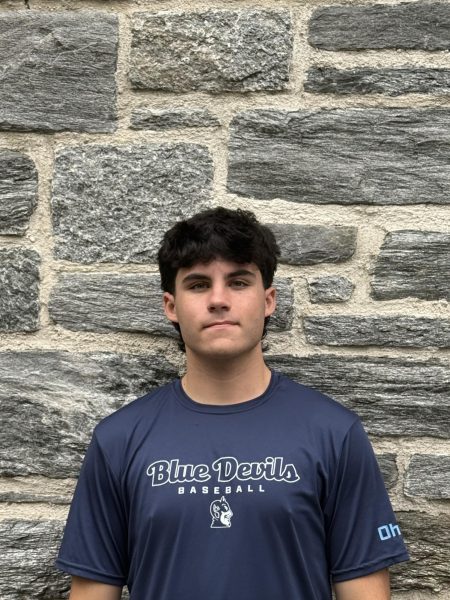















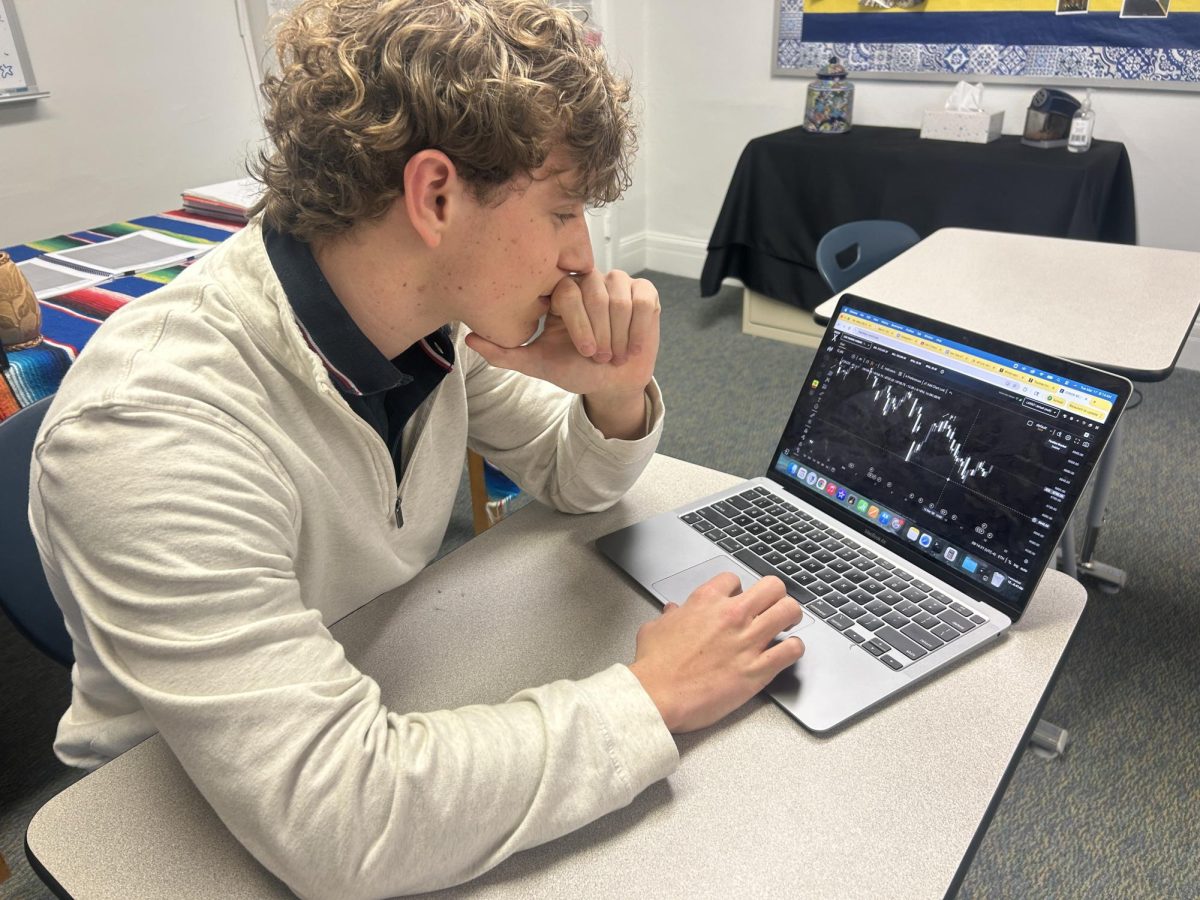





















It’s 6 pm. While others are at lacrosse practice or eating dinner with their families, Patrick Donohue is dialed into his laptop. The Asia session has just opened, and Pat is analyzing, waiting for prices to change. Utilizing technical analysis and discretion to decide when he should buy, he buys and sells within 30 minutes to an hour and a half later. Whether money is made or lost, he’s done for the day.
During the COVID-19 pandemic, day trading has skyrocketed, becoming a commonplace method of investing. To be exact, day trading is a strategy of buying and trading investments quickly to make profits. These investments can be stocks, Cryptocurrencies, ETFs, bonds, and more. Platforms like Webull, IBKR Pro, and thinkorswim have all become utilized significantly more, specifically by a younger audience. Day trading is most common for adults under 40, and can be used by anyone above the age of 18. The reasoning behind this is that younger people, usually men, enjoy a rush from these high-risk trades, similar to gambling. These people typically turn to platforms like TikTok, Instagram, or even their friends to decide what to buy. Day trading can be profitable, but it takes a lot of training, learning, discipline, and strict money-management skills to get good.
Donohue knew that learning day trading would take time, so after his junior school year, he decided to go all in. After he learned some basics from a friend, he “watched around 40 to 50 hours of learning videos, usually around two to three hours per day, taking notes, practicing online,” he told me. As soon as he felt he was ready, he dove into the market head-on and faced a learning curve, as, “once [he] started to actually put real money into it, [he] saw [he] needed to improve.”.
Donohue faced trouble learning and losing money early on; however, after three to four months, he became profitable. He acknowledged that this is not something that he recommends for people to do, as, “it’s extremely difficult, like, almost nobody beats the markets because hedge funds and financial institutions are paying teams of engineers with PhDs and have millions of dollars just to create a strategy that could beat the markets,” he said. The reason he finds himself able to make money is that he is able to follow principles and has money-management skills. “It’s rare to be able to have control of your emotions like that,” he told me.
The typical day trader’s profit margins are somewhat similar to sports betting, as 3% of sports bettors are profitable in the long run. There are stereotypes made by plenty of people that the two are alike, or even that day trading and gambling are the same thing. Day trading is, unlike what many think, different, as it depends on analyzing market data and informed decision-making based upon research. People can turn day trading into something similar to a gamble by going outside of their strategy and going for big returns, but those who stay dedicated to their method are commonly the ones making money. When day trading turns into depending on luck and chance to make big money, that is when it becomes similar to gambling.
The way that Donohue views it, life is a gamble. “Marriage is a gamble. Driving is a gamble… everything you do in life is a gamble,” he said. He believes that you have to be able to take risks to get what you want, and in this sector of investing, you are bound to lose money. It’s all tied back into emotional control for him, “ I’ve never really been the sort of like, addictive personality to just be going and going and going and not stopping,” he told me.
Continuing to day trade for the rest of his life is not the end goal for Pat. “I think my end goal is to start my own hedge fund using the knowledge that I’ve obtained through financial institutions,” he said. He is very into researching the market and different methods of investing, and has put these into practice, as he’s, “developed and coded strategies based off those academic papers,” he stated. The skills that are being built now by Pat will help him in the future to get a head start in college and beyond. Towards the end of my interview, Pat gave me realistic ideas and explained how this will help him, as he stated, “This initial profit could just be luck of the draw, because really, nobody beats the market, but I want to be able to take these skills that I’ve learned and used in the real markets to my workplace.”