









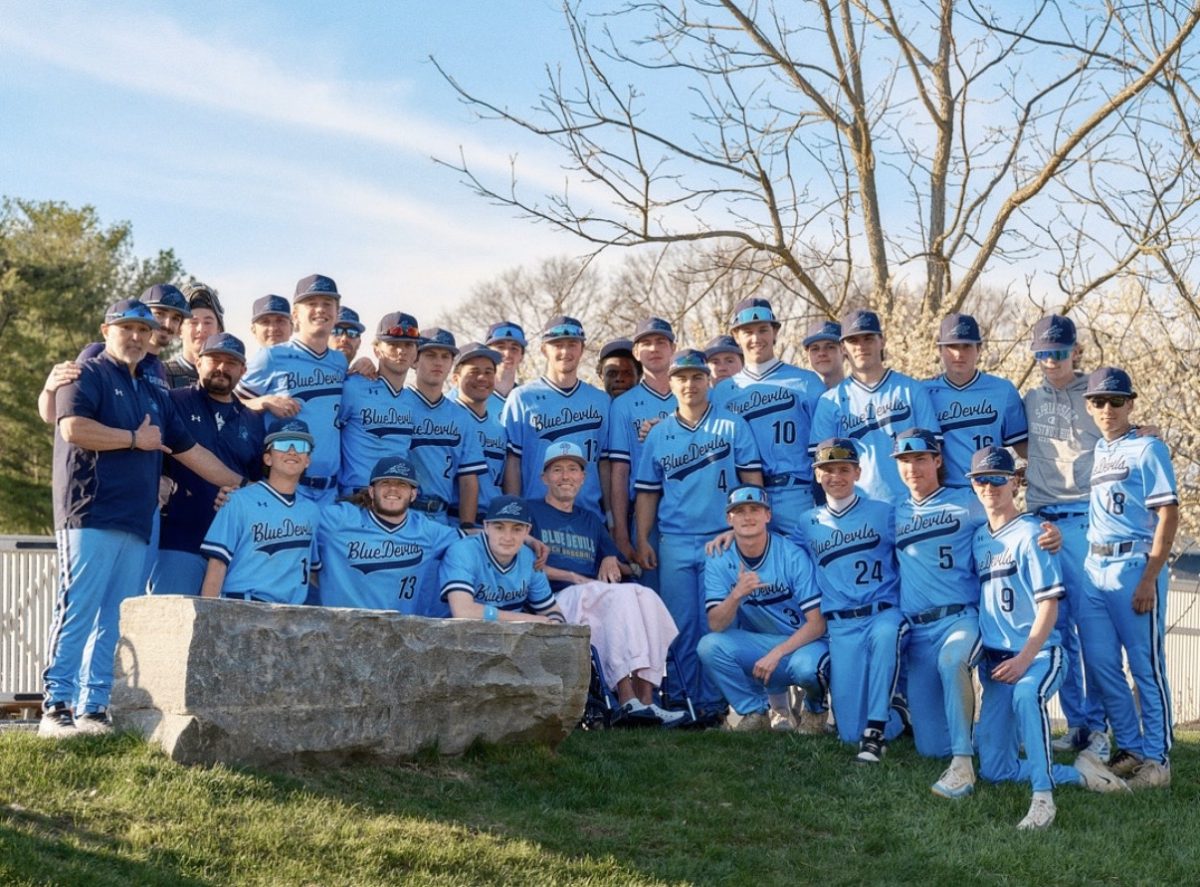






























The baseball field at Springside Chestnut Hill Academy is quiet in the early afternoon, the grass emitting the classic freshly cut smell we all know. The chalk lines run straight as arrows from home plate to first and third. Players move through warmups, gloves popping all around, cleats digging into the dirt. From the outside, it looks like any other Blue Devils game day. But something important is missing.
The voice.
For years, that voice belonged to the one and only Coach Mike Brown. Loud and direct, impossible to ignore. Some said they could hear him across the campus, calling out his players’ mistakes, pushing them to be sharper, tougher, better. Now, the dugout feels hollow without it.
Brown’s connection to the SCH baseball program runs deeper than just being a loved coach. Long before he began his coaching career, he built his legacy as a standout baseball player for the Blue Devils. Throughout his tenure as a student athlete at SCH, he earned 12 varsity letters across three sports. He scored over 1,000 points in basketball. But where he truly stood out was on the baseball field. On that field, he set 17 records and earned All-City honors three times. In 2000, he received the famed Patterson Cup as the school’s top athlete. After playing college baseball at Temple University, Brown came back to coach, helping lead SCH to an Inter-Ac championship in 2016 and again in 2023. He has stayed involved year after year, building players and holding them to a high standard.
This season, the SCH baseball team is playing for something way bigger than themselves. They are playing for a family, a father, and a friend. A couple of years ago, Brown was diagnosed with ALS, and this is the first season that the disease has kept him away from the field. For the players, his absence is felt every single inning.
“It’s not the same,” senior pitcher Joseph Pieczynski said. “He was the guy who just gave it to us straight. If you weren’t good, he told you.”
One memory Pieczynski recalled was a cold Saturday morning practice. The team had to complete a hard drill. 21 outs without a mistake. One misplay or bobble, and the outs reset. About halfway through the 21 outs, there was a hard ground ball hit, and Pieczynski moved when he should have stayed back. He made the play, but Brown stopped everything.
He let him hear it.
“If you ever do that again, you are not pitching,” Brown told him. Pieczynski never made that mistake again.
That was the epitome of Brown’s coaching style: demanding and clear. He focused on details that most players overlooked, and it worked.
Dax Caplan, now a senior on the team, felt that message early in his career. “As a freshman, it was a rude awakening,” Caplan said. “He made it clear when you weren’t doing the basics right. A lot of people didn’t like it at first, but it truly made us better.” Brown pushed all of his players physically with his drills and training regimen, but his overall impact went way deeper.
“Don’t ever let a moment go,” Caplan said. “With what he is going through, it makes you appreciate everything. Even the small things.”
This perspective has changed the team immensely.
Without their coach in the dugout, the players have to fill the gap themselves. They communicate more, hold each other accountable, and make each other better men. “It’s brought us closer than ever before,” Pieczynski said. “We’re like brothers this year; it gives us something to play for.”
That “something” shows up in small ways all across the field. Players stay for extra reps after practice ends, pick each other up after errors, and help clean up the field after a game ends. The game for the Blue Devils has become less about individual performance and more about playing as a team.
Brown’s former teammate, Stu Miller, saw this coming and had this to say: “When Mike got diagnosed with ALS, he doubled down on his commitment to family and the SCH sports community. His strength and unselfish nature are unmatched.”
That mindset now lives in the team.
Every pitch, every inning, carries more weight than it ever has. There is no longer a lot of pressure, but immense purpose. The players are still chasing wins and believe they can compete for an Inter-Ac baseball title. But the meaning behind the goal has changed.
Baseball became a way for the players to respond tough, stay connected, and to carry on the lessons that Coach Brown has taught them.
As the game starts, the dugout comes alive. Players call out signs, gloves pop. The energy slowly builds up, and even without him there, Brown’s presence is clear in every detail, every decision made, and every voice echoing across the field.
The voice is gone, but the message isn’t.