









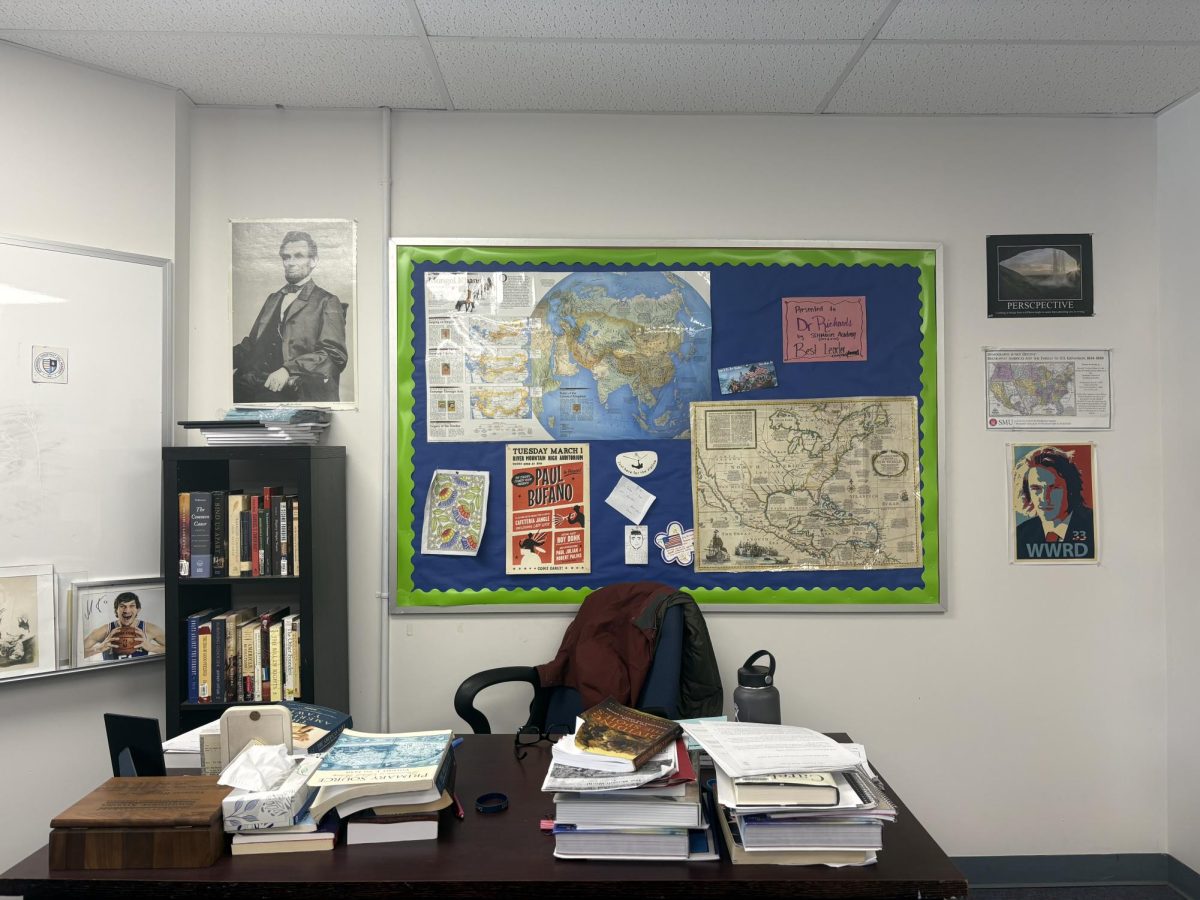





















“We are better than the worst decision we’ve ever made,” said Colleen DiDonato, 11th-grade English teacher. Her eyes were watering as she was trying not to make eye contact with me. After saying something that deeply affected her, she tried to become humorous again and began to laugh off most of what she had just said.
Do you agree with her? Do you think that people are better than the worst decision they have made?
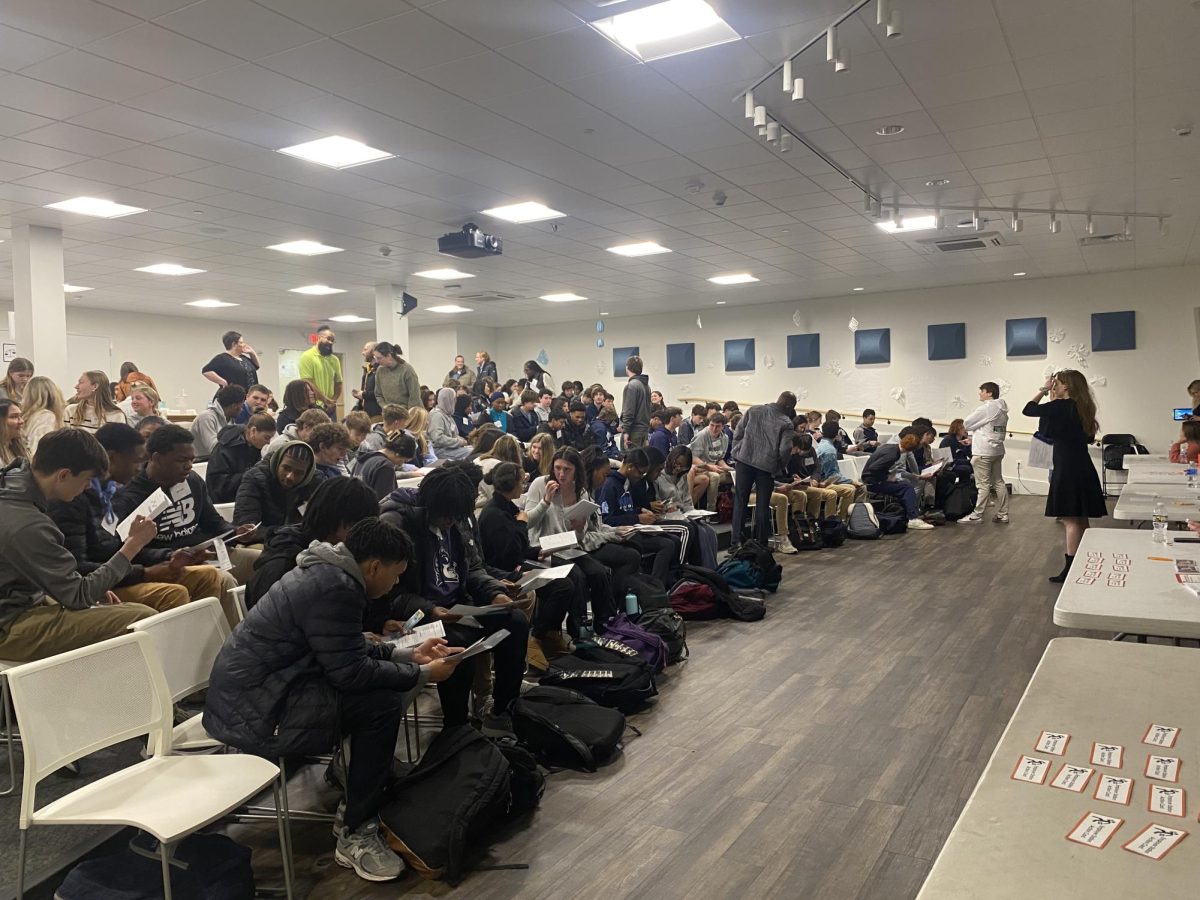
Last year, SCH juniors participated in a reentry simulation in partnership with Eastern State Penitentiary Historic Site that was developed by the U.S. Attorney’s Office (Eastern District of Pennsylvania). The simulation is designed to educate students about the lives of people who are released from prison and have to reintegrate back into society. During the simulation, students were given an identity of someone returning home and had to go through many tasks in order to experience the everyday struggles released incarcerated people go through. Many of the students failed these tasks, creating more awareness of the challenges formerly incarcerated people face, which was the ultimate goal of the simulation.
Ms. DiDonato was one of the people who contributed largely to this project. Her involvement in this issue has a long history. When she was a young girl, her uncle was frequently in and out of prison, and her family never explained what was happening around her, even after his death. In addition, she said, “I had a friend when I was in high school, and he was a little bit older. He went to jail for five years, and I visited him a few times a year, which made me want to be a probation or parole officer.”
In her first year of college, she said she majored in criminal justice until she switched over to English. Her favorite teacher in college, Mr. Bursk, taught poetry to incarcerated people; she ended up liking his classes so much that she took all of them and ended up with an English degree. Even as an English teacher, she still wanted to be able to help people who were in a similar situation to her uncle and friend, so she started educating people more about this topic.
During the simulation, Ms. DiDonato introduced the class to a man named Q, who is committed to working with recently released prisoners and who was previously incarcerated for eight years. Seeing him speak about life after prison made the challenge of reentry in the simulation feel immediate. When the simulation started, the room buzzed with a sense of frantic desperation and disorganization. Students scrambled to different stations with limited resources, trying to get a job, afford food, attend their meetings with AA, or meet with their parole officers.
I began to understand that what I was feeling in those moments was what people like Q and his peers went through for days, months, or years when they were released from prison. About eight months after the simulation, Ms. DiDonato reached out to Q and set up an interview between us.
When I questioned him about how it felt to be released, his face hardened. Q described returning to the outside world after spending eight years in prison as a “culture shock,” where even basic interactions felt complicated. He explained, “In prison, you wear one face necessary for survival. When you come home, that mask needs to be removed.” In other words, he developed a persona in order to survive and protect himself when in prison. One of the most challenging parts of being released was getting rid of that persona when being around family, finding work, or navigating social spaces.
Even with his determination, he found that securing necessities for himself and his family, such as housing and employment, required constant effort, and it was hard for him not to give in to his old habits, just as it is for many released prisoners.
Ms. DiDonato emphasized that many people leaving prison “don’t have a lot of help” and that reintegrating back into society is more than just finding a job—it is rebuilding a life. The struggles Q went through were not personal; they reflect a systemic problem. According to the National Reentry Resource Center, formerly incarcerated individuals face an unemployment rate that is more than five times higher than the general population, which is around 27% or higher, and roughly two-thirds of people released from prison are unemployed within their first year back.
When I asked him about what was most affected when he was released, his eyes started to water, and his chin trembled, although he tried to keep his facial expression neutral. “My daughter was ten when I got back from prison,” he said. Rebuilding a connection with someone who had grown up without truly knowing him, and whom he was not able to be present for, was the most challenging part of his reentry. His absence from his oldest daughter’s life is something that will always have an effect.
“My wife has a 20-year-old and an 18-year-old from a previous relationship, and then I have a ten-year-old, a seven-year-old, and a five-year-old with my wife. They will never not have me. But my oldest daughter, who has now reached her twenties, did not have me in her life. She needed me in her life in those formidable moments of forming herself. She’s the one who suffered the most from my absence.” Knowing that no apology or explanation could restore the lost time they did not have together, Q carries the weight of the years his daughter missed without him and does everything in his power to make up for those years.
Something I did not understand before speaking to Q and Ms. DiDonato was how terrifying and grueling reentering society can be. Q’s struggles at rebuilding a relationship with his daughter, while also trying to find employment, which comes with societal judgment, need to be heard.
While this is one person’s story, it is also a reflection of a pattern that thousands of people released from prison face every day. “The challenge is knowing who to trust…who’s not going to throw your past back at you,” said Q.
This particularly vulnerable moment gave me more awareness about how hard it is for people who are in Q’s previous predicament to return to society. They require more than basic resources; they need some type of emotional support and understanding. Ms. DiDonato echoed this in her reflection on her motivation to educate students. She noted that people returning from incarceration often face societal assumptions based on their past. She believes that there should be more awareness among young people in order to break the cycle of judgment. “…If they are to be given a true second chance, we as a society have to, at the very minimum, not judge them, but also support them in their journey to reintegrate into society,” she said.
What I have learned through this experience is that we cannot judge people at their worst and that we cannot take the things we have for granted.
There are many people in the world who would give anything to be in our position. “I can buy groceries. I can pay my heating bill. I am not wealthy by any means, but all of my basic needs are met. My children’s basic needs are met. I get to bring my daughter to this institution, right? I did not go to a school like this. So I think that I, like you, just try to remind myself of all of the positives,” said Ms. DiDonato. “Yeah, people definitely take time for granted because it comes and it goes so quickly. We don’t know when our last day is, and so living life to our fullest capacity is important—being kinder, being nicer to people, and smiling,” said Q.