





































Standing in a conference room in Italy, presenting her research on human-animal interactions in the ancient world, Ms. Frankel was surrounded by others who shared a similar passion for the ancient world. The conference was focused on human-animal interaction in the ancient world and the evidence of animal agency. This conference is just one of many examples of how Frankel’s interest in Latin has grown over the years that she has been studying the language.
Latin might seem like just another language class to some people, but for Ms. Frankel, it is the center of a lifelong passion. Although Latin is considered a “dead language” because there aren’t any native speakers and it’s used today only as the foundation of most modern romance languages or in the Roman Catholic Church, Frankel has made it part of her everyday life. From a turning point in a college class to becoming a Latin teacher to high school, Ms. Frankel isn’t just teaching kids Latin; she is teaching them life skills, grit, and determination.
Ms. Frankel started taking Latin in the sixth grade. “It was okay,” she recalls. “I liked it well enough and took it through my senior year in high school.” When she got to college, she placed out of two semesters of Latin but was required to complete three semesters for the language requirement, so she signed up for Latin III. “It was the choice that propelled everything.” The class focused heavily on poetry, especially the work of Horace. “I just loved reading and talking about what was going on in the poems and myths,” she said.
Frankel became fascinated by the tension within the language because of its precision. Latin is precise, and that’s probably why it is the baseline for a lot of languages and grammar; everything matters. Within that structure, there is also space for stylistic choices that make it almost feel like a creative art form. That balance hooked her.
The same balance that shaped her love for Latin has followed her into how she shaped her classroom. “Latin is hard,” she said bluntly. Latin isn’t just a different language and the foundation to modern vocabulary; it’s also an ancient way of thinking, so things don’t always match up in modern concepts of how a language is supposed to flow. “It’s hard to get the sense of tone.”
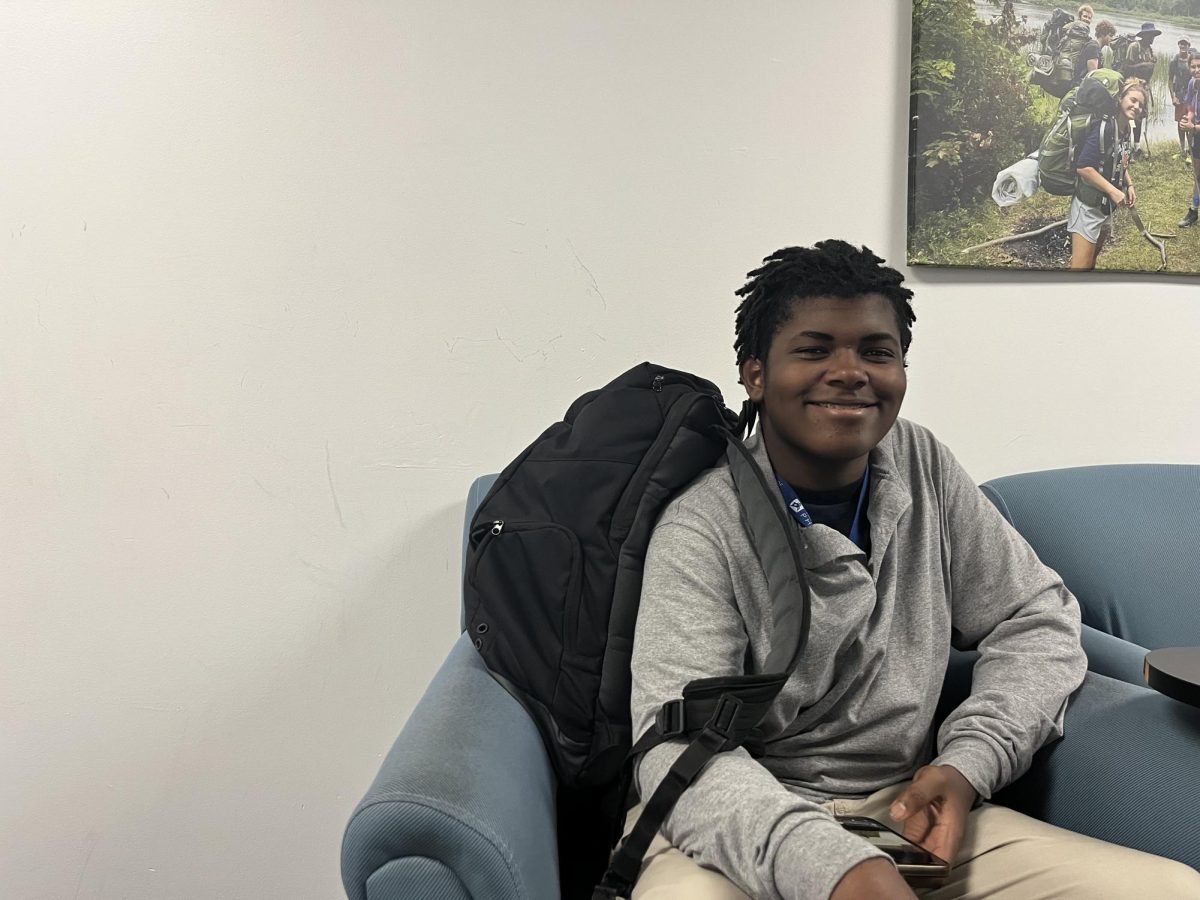
Latin may be considered to be a hard language to grasp, but many teachers and scholars in 2008 believed that it would be a good language to add to different school systems. Latin is a specific language that focuses on grammar and good language structure, which can lead to enhancing strong language and vocabulary skills. “I feel like some words I can understand more because of the word stem, I can recognize,” Ashlyn Smith ’26 said.
Even though Latin may be a hard language to learn, there is a beauty in the struggle. One of her favorite moments as a teacher is seeing when something clicks for her students, such as when they can identify a part of a text or connect a myth to a larger theme.
As of 2017, over 210,00 schools, both public and private, across America have decided to add Latin into their school curriculum. Latin is an Indo-European language that originated in Italy, and was spoken as the native language for over 1,000 years, but later eventually paved the way for Italian and so many other Romance languages across the world. The earliest inscription of Latin was between 600 and 700 BC. The language consists of a 23-letter alphabet, with the exceptions of the letters j, u, and w. Some common words and phrases that were used during the time are: Alter ego, Status quo, Vice versa, Versus or vs., Alma Mater, and Cum laude.
When asked about advising anyone interested in taking Latin, the advice she gave was: “You have to have discipline. It’s not easy, and it’s worth the work.” Frankel’s love for Latin is definitely seen by her students, and she makes the class fun and entertaining. When asked about what she likes the most about Frankel and her Latin class, Smith said, “I really like how close we all are, because of how small the class is. Ms. Frankel is just very supportive, and she pushes us even when we don’t want to, but it benefits us a lot.”