






















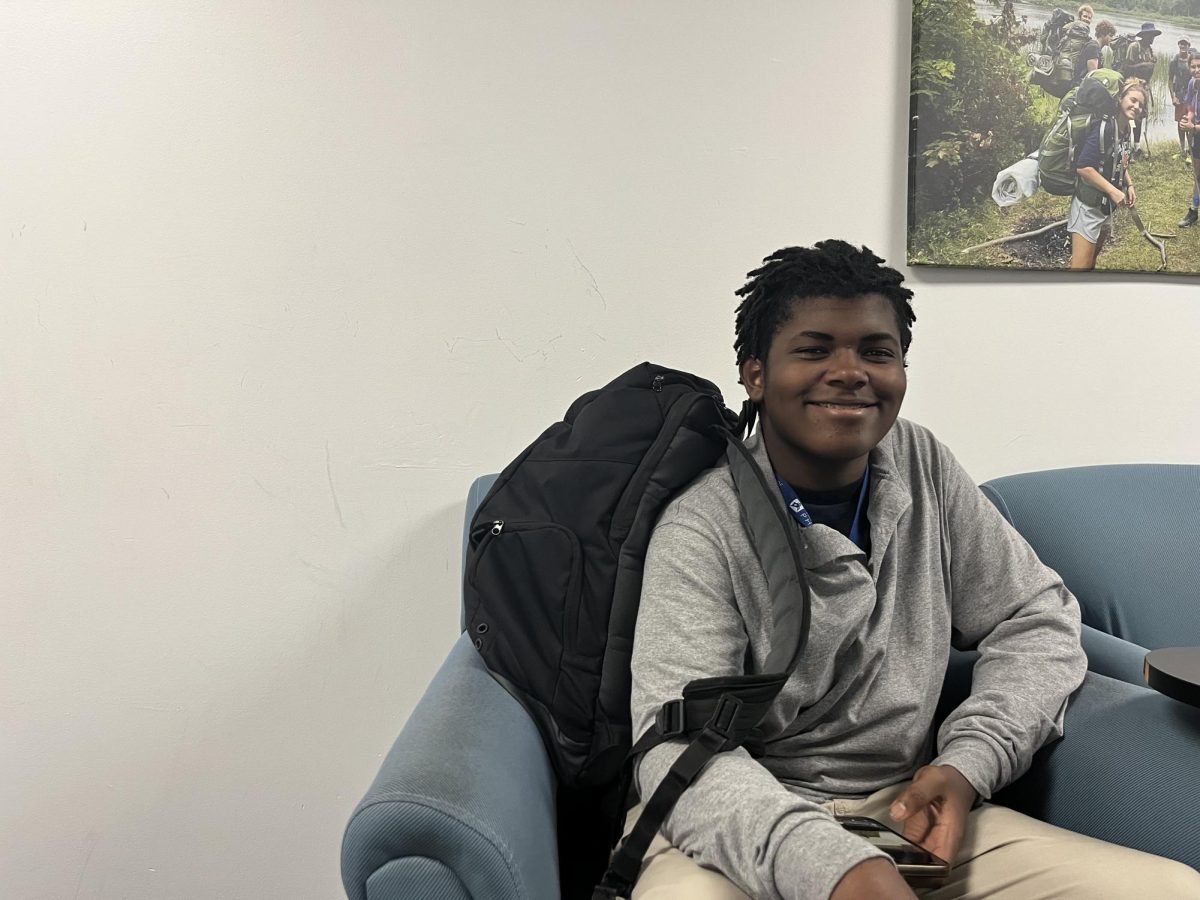




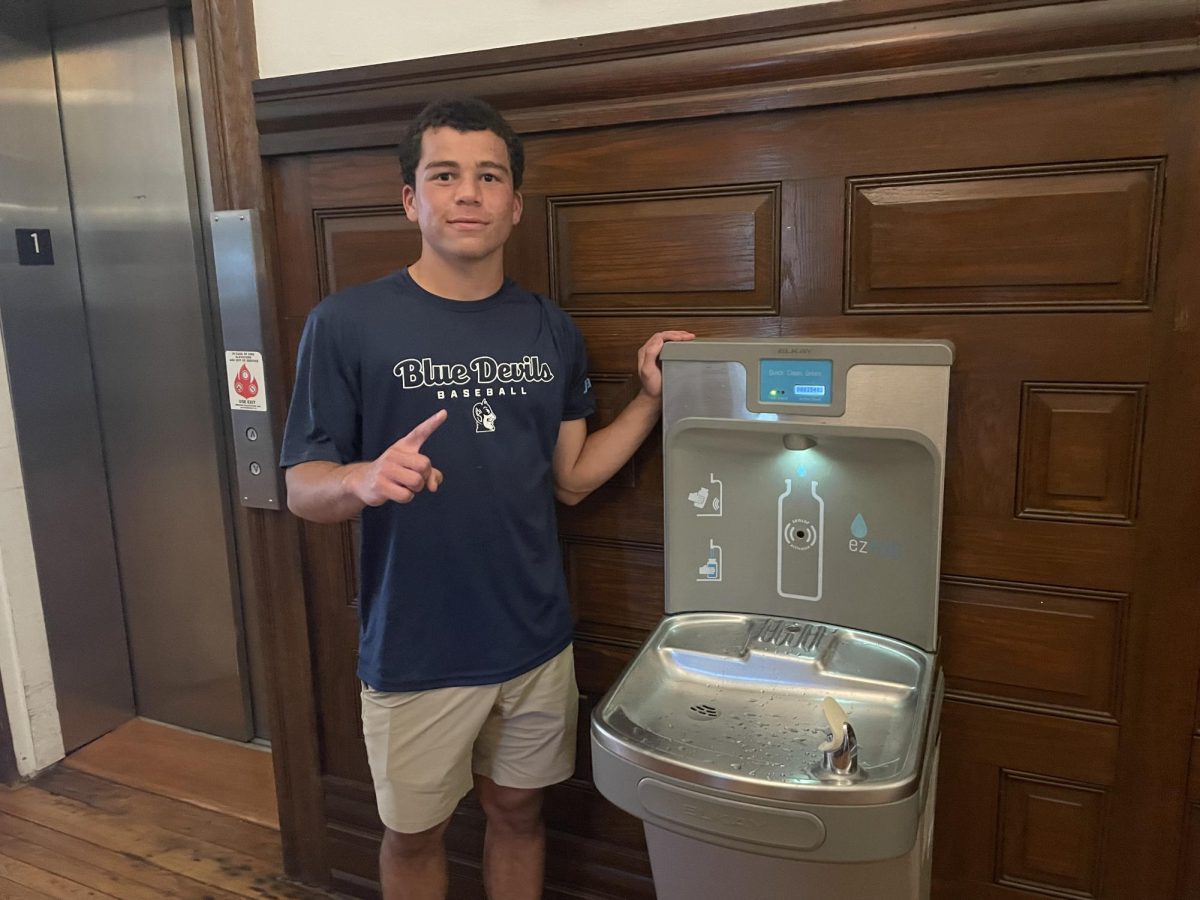












On November 21, Lisa Damour, PhD, spoke with the SCH Upper School during assembly to discuss adolescent mental health and growth. Dr. Damour is a distinguished clinical psychologist, New York Times best-selling author, and a widely respected and recognized expert on adolescent mental health and development. She also served as a consultant to the movie Inside Out 2, collaborating with the filmmakers to ensure that the portrayal of teenage emotions in the film accurately reflects how adolescents experience stress, anxiety, and emotion during puberty. We are truly fortunate that our school is among the three nationwide that she speaks with directly. I had the incredible opportunity to speak with Dr. Damour to dive deeper into the teenage mind and discuss mental health with her. Here is our conversation:
Q: “What do you think is the most common misconception adults have about teenagers’ mental health?”
A: “I think adults think that teens are overreacting. If you spend time with teenagers and pay attention, they are managing far, far more than we appreciate, and what we adults ever did when we were teenagers ourselves. And, I think we also underestimate how little time they have to do the work that we give them. That so much of their day is taken up with obligations that they are required to attend when, in fact, they actually have a lot of other things they need to do. So they’re managing all of these obligations and a very heavy workload and activities and also life at home.”
Q: “Is procrastination really about being lazy, or is something else going on there?”
A: “I like to think about bad and good procrastination. Bad procrastination is when you’re anxious about something and you avoid it. And then the more you avoid it, the more anxious you get, which makes you avoid it more, and then you end up in trouble, and you’re pulling an all nighter and doing a lousy job. There’s also good procrastination, which is when there’s work we have to do that we really don’t feel like doing and the only thing that’s going to get us to do it is if we no longer have a choice. I use this all the time. To use it well, you have to be able to estimate accurately how much time you need. And with that comes experience.
Q: Why do you think some students do better under pressure while others fall apart?
A: I think it has a lot to do with how you conceptualize pressure. What I just described is a deliberate process of creating pressure conditions for myself, because that’s the only way I’ll do something. Sometimes, I think students get the idea that pressure’s bad, that they’re not supposed to feel some stress or anxiety. Then, when they feel that, they can become overwhelmed. I think we need to reconceptualize stress and anxiety. Sometimes, the only way we’re going to do something is if we’re anxious that we’re not going to get it done. If we see stress and anxiety as motivating, they can be helpful to us.
Q: How should teens differentiate good stress versus bad stress?
A: Good anxiety is when you are anticipating a threat, and it makes you uncomfortable. So it might be that you show up at a party and it feels a little out of control, and something really bad could happen, and you feel anxious. That’s good anxiety. If you have a big test and you haven’t started studying, and you’re anxious, that’s good anxiety.
Bad anxiety, or what we diagnose as an anxiety disorder, is when you’re anxious and nothing’s wrong, or when the anxiety is way too big to be useful, like a panic attack. There’s two kinds of bad stress. One is chronic stress, which is stress with no break. So as long as people are recovering, stress is good. But if they’re always stressed and they can’t recover and they can’t get enough sleep, that will eventually break them down. The other form of stress is trauma, which is an overwhelmingly horrible thing. But regular doses of recoverable stress is actually what makes us learn and grow as people.
Q: How do you recommend teenagers create a healthy boundary with social media without feeling left out or disconnected?
A: To create a healthy boundary with social media we have to be clear about who the bad guy is here. It’s not the teen. The bad guys are the companies that use millions of data points about each of us to put irresistible content in front of us. They’re the bad guys. I am watching more teenagers put time limits on their own phones. I think that is brilliant, because this is not a fair fight. This is all of Silicon Valley against you. You can’t win that fight unless you put some time limits on it. Put time limits on. Get what you want while not letting powerful adults in California take advantage of you. Use those time limits so that the way these platforms are designed doesn’t get the better of you, harm your mental health, and take you places that you were never meant to go.
Q: Why do you think that teenagers and adults compare ourselves to everything we see on social media even when we know it’s curated?
A: Maybe we are programmed as people to want examples of the kinds of outcomes we should strive for and use that as motivation and inspiration. That’s all great if you’re watching a classmate do really well academically, and that puts lots of fire under you and makes you want to work harder. That’s fantastic. But so often the platforms are engaging with what they have, which are visuals. So they’ll put it in front of us, visuals, you know, and as humans, we’re very programmed to respond to visuals, and we’re very programmed to be responsive to beauty. I think there’s a real value in limiting how much time we spend thinking about how we look.
Q: How should teenagers differentiate normal friendship conflicts and a toxic friendship?
A: Conflicts are part of being in a relationship. What we want to see are really healthy conflicts. A healthy conflict is one where each person is respectful of the other. One person stands up for themself while also being very, very, empathic to the other person. If that’s what’s happening. It’s probably as healthy as can be. What’s worrisome is when a conflict is handled in a way, where it’s ‘resolved’, but one person is just dominating the other,using tactics like using guilt to get their way, or playing the part of the victim, or involving a whole bunch of other people, when it should be a disagreement between two people. That’s probably not that healthy of a friendship.
Q: What’s the best advice you’ve ever received from a mentor or somebody you’ve worked with?
A: I think it was along the lines of being accepting of the fact that if you’re doing work that’s hard, you’ll make errors. Because if it’s hard, you don’t have mastery. You gain mastery over time, and the way you gain mastery is by making errors.
Q: Lots of teenagers confuse normal sadness with depression. How should they be able to tell the difference?
A: It’s a really important question that we actually have a very clear answer on. Sadness is about loss. You’re sad because something has been lost. The death of a pet. You didn’t get into the college you wanted. You’re sad about something. Depression, you’re kind of sad about everything. There’s not a focal area. Everything feels impoverished. Including the self. Sadness, there’s something missing in the world. Depression, there’s a sense also that I am inadequate. I am not good enough. I’m a weight on people. Sadness is just sad. Depression, there’s a sense that the self is impoverished too. Sadness comes and goes, depression persists.
Q: What is the difference between coping and self harm?
A: Abusing substances is coping. Taking it out on other people is coping. Avoiding problems is coping. All of those coping strategies, though, are going to make things worse. The goal, everywhere and always, is to cope in a way that brings relief and does no harm. Whether or not you intend to harm yourself, it’s unhealthy coping. But when people harm themselves, they’re wrestling with something. They’re trying to get back to feeling better. That’s exactly what we want them to do, but we want them to use the very large repertoire of healthy coping strategies that can include all the wonderful things we talked about in our assembly*.
Q: What is one thing you wish every single teenager knew about themselves and their mental health?
A: That it is perfectly okay, and often a sign of their mental health, for them to become upset. That’s what you’re supposed to do when bad things happen. What I want them to focus on is how they get themselves back to feeling better. And I want them to do that in a way that brings relief and does no harm.
* In our assembly, Dr. Damour said that watching our favorite shows, listening to music that reflects our emotions, and eating comfort food can all be healthy coping strategies for adolescents and people in general.