





























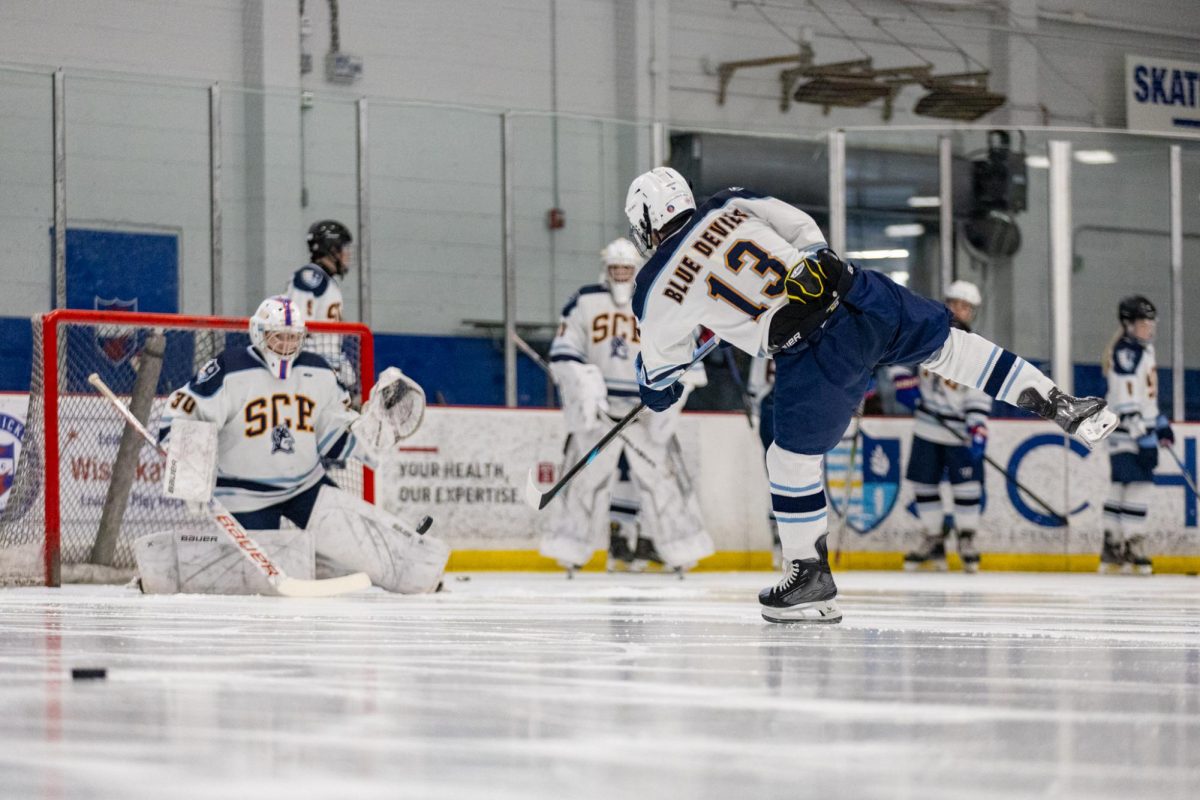
I eagerly walked into the Wissahickon Skating Club ice rink ahead of the SCH home match against Germantown Academy. I was there to have a conversation with the team’s head coach. I waited for a couple of minutes in the sweat-stained locker room, talking to some of the students on the team. Nervously, I asked them how their coach was, and resoundingly, one after another told me that he was a great coach and, overall, an awesome guy. I left the locker room to escape its stench and wait at the front door for the coach. After a minute of waiting, Matt Cassidy, the head coach of the SCH hockey team, burst through the door in a brown suit and blacked-out sunglasses. Promptly, he removed his glasses, revealing a black eye and stitches on his brow. I had heard a story that he had been accidentally drilled right above his eye by one of his players; however, he looked completely unfazed, putting his battle scars on display for everyone in the arena to see. As he introduced himself to me, he explained, “I took off my glasses in front of GA to intimidate them.” At this moment, I chuckled and frankly agreed, I definitely would have been intimidated if my opposing coach had been flaunting a busted-up eye.
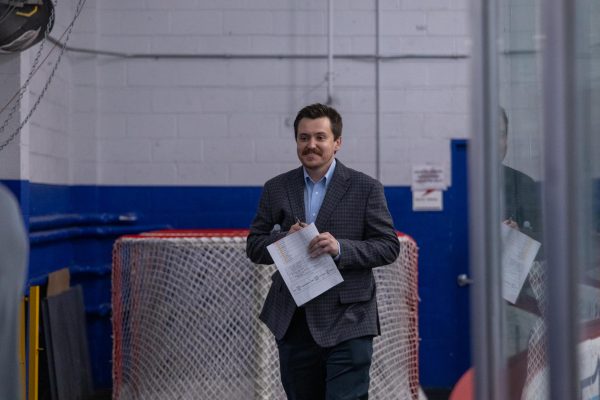
(Tobey Schwartz )
Hockey and Philadelphia have had a complicated relationship. Many kids opt to play other winter sports like basketball rather than the icy sport for a multitude of reasons. First, a complete set of hockey equipment can run a family anywhere from $350 to a couple of thousand dollars, and the cost to play on teams and get on ice at rinks can drive this number even higher. Finding ice time is also a challenge. Many teams need to share a limited number of rinks for a limited amount of time, making it harder to start hockey and improve upon your skills. The biggest disadvantage hockey may hold is that the players need to be able to skate. Many hockey players I have talked to have said that learning to skate like a hockey player is like relearning how to walk; the time and effort that goes into this skill simply scares away many families. For basketball, all you need to have is a pair of shoes, a ball, and a court, which exist in almost every neighborhood you go to. Seeing how much harder it is to play hockey, people don’t choose to lace up their skates and pick up a stick.
A study from the 2022-23 hockey season showed that nearly 388,000 children chose to play hockey, which, compared to other American sports, is very low. Its main competitor, basketball, trumps this number with 28.1 million kids ages six and above playing, also making it the most played team sport in America.
“I know one thing with hockey, it’s really tough. It’s also a very expensive sport, but partnerships [can] set kids up so they get to play,” said Coach Matt. He also sees the challenges around ice time, “There’s a limited amount of ice and a limited amount of time, and ice time is expensive. That’s definitely an issue.”
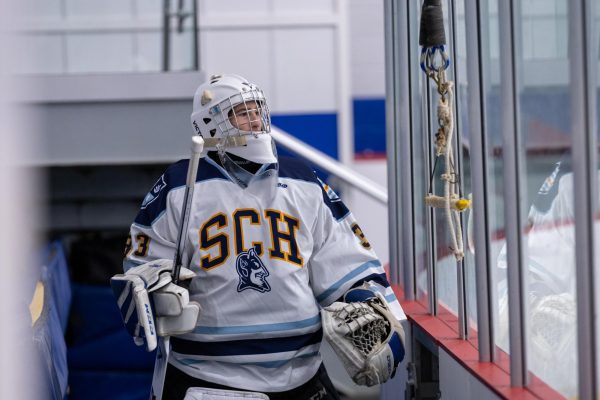
Coach Matt always tries to find a way around these challenges, though. “I play roller hockey in my free time. If you can’t get ice, you work on roller hockey, you can still work on your hands and positioning. You don’t necessarily always have to be on the ice.” He also brought up some of the wonderful programs around us that help kids with their journey through hockey. Even though many factors drive people away from hockey, he manages to always look on the bright side and find a solution.
Coach Matt earned the head coaching role of the hockey team in the middle of the 2024-25 SCH hockey season. The team’s last championship win was in 1977, and over the last eight years, the program has hit a little bit of a rough patch, only managing to win half of its games once in a season. This can partly be attributed to the number of players. It is hard to recruit fifteen-plus people who are very talented at hockey at any school, and it is even harder to find an underclassman who will start hockey in high school and play for three to four years.
The hockey team is also underrecognized because it runs in the same season as one of our school’s biggest sports: basketball. People generally miss what is going on behind the scenes and within the team. “They’re all friends. They hang out. It’s a really good team locker room environment,” Coach Matt told me. “One thing that we were trying to work on this year was getting freshmen to sit next to seniors and get to know them better, kind of to be mentors.” Sophomore goalie Tristan Loder also appreciates the community around the team. “The team’s community, especially this year, has taken a big step up. It’s the little things. We all show up to our games, and it is like we’re a team, not just when we’re playing on the ice, but when we’re outside of it too,” he said.
Creating a hockey community in a city poses more of a challenge than inside a small private high school. One of the most prominent and important initiatives providing hockey in Philadelphia is the Ed Snyder Youth Hockey Foundation, started by the late Philadelphia Flyers chairman, Ed Snyder, in 2005. The organization aims to give opportunities to underprivileged kids in the greater Philadelphia area through education and, in Snyder’s words, “a chance to play the greatest game ever invented.”
Every year, the Ed Snyder Foundation funds hockey clinics and gear for 450 Philadelphia elementary and middle school students. In its 20-year existence, the foundation has also invested over nine million dollars in scholarships and has done great things for many Philadelphia children.
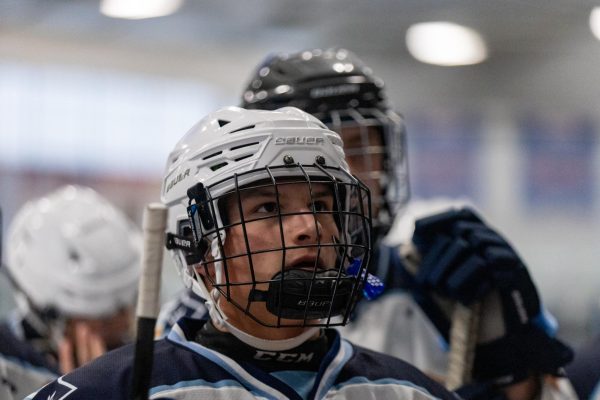
While the Ed Snyder Foundation may seem like it is only making a difference to the inner-city kids, it is also doing a multitude of things right next door to our school and within our own hockey program. The Ed Snyder Foundation is also partnered with the Wissahickon Skating Club, our home rink. Coach Matt also noted the foundation’s influence in and around our school. “SCH is the partner out with Ed Snyder,” he told me. “They try to get some new students here from their program.” This connection to the rink creates a strong community around hockey in the Chestnut Hill area and has introduced many of the players on our team to the sport. Loder, who has been playing hockey since he was seven and has spent nine years playing for the Wissahickon Skating Club, appreciates the club’s impact on him and the foundation in conjunction with it. “It’s given me a community of people I can rely on and count on and be a part of something bigger.”
This widespread impact throughout the entire city of Philadelphia not only shows what good people are capable of doing, but also the community that can be created by introducing the youth to a sport like hockey.
Before my interview with Coach Matt wrapped up, I asked him what he wanted the school to know about his team and players. “My whole vision was just to come in and make a team that we’re proud of, that we’re going to compete every day. We might not have the most advanced, you know, [most] talented players all playing triple-A hockey, but I don’t really want that. I really just want players that are going to buy into the system and are just going to work and compete, and that’s what we have had so far. Hopefully, we can keep streaming some wins along and give you guys a reason to come out and watch us.”