

































Over the past 5 years, SCH’s own Dr. Richards has been working consistently on the publication of his recently released book, The Unfinished Business of 1776: Why The American Revolution Never Ended. The book focuses on the promises of the American Revolution and the various ways in which these promises were and were not kept throughout early American history.
During the early stages of his writing process, Dr. Richards had a broad idea of what he wanted his book to focus on. “I wanted to write a kind of bigger book about how there were so many possibilities in terms of what would happen in US history after the Revolution,” said Dr. Richards.
But as time went on, he began to focus on a more specific idea, targeting a release date in 2026, 250 years after the nation’s founding. “Eventually, as I started writing some chapters, I realized this was really all about the promises of the American Revolution,” he said.
Dr. Richards first started working on the book that would become The Unfinished Business of 1776: Why The American Revolution Never Ended during the fall of 2019. Unfortunately, just after beginning the process of writing, he was forced to put a hold on his work due to the Coronavirus Pandemic. “There was no time to do any sort of book work,” said Dr. Richards. “Even though I was home all the time, I had at that point my two older kids, who were five and two, and my wife works for a hospital, so she was working every day.”
Even after the pandemic, Dr. Richards still had to balance writing his book with his other responsibilities, including being a history teacher at SCH. As a result, he wrote the majority of the book during the summer, when he wasn’t teaching. “If the book took me five years to write, probably something like sixty to seventy percent was written over the summer,” said Dr. Richards.
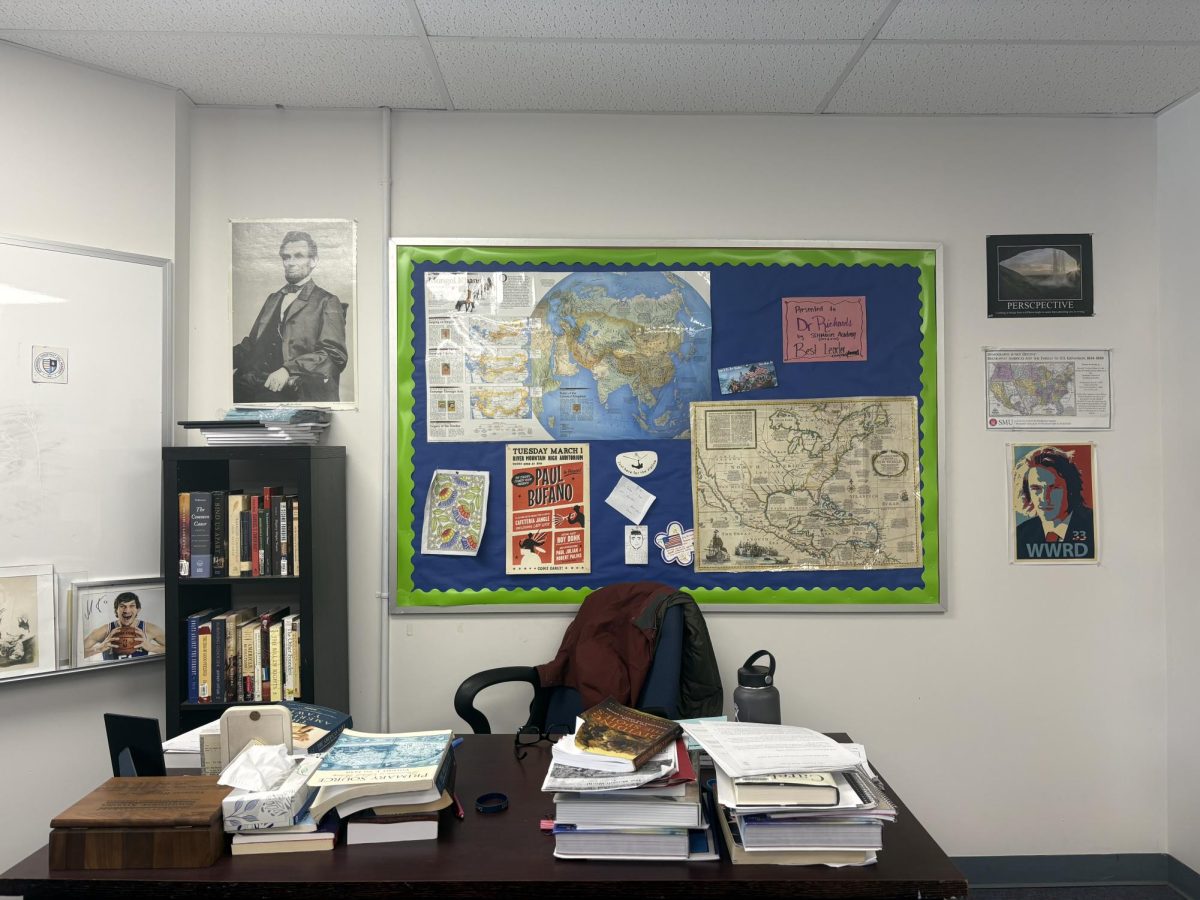
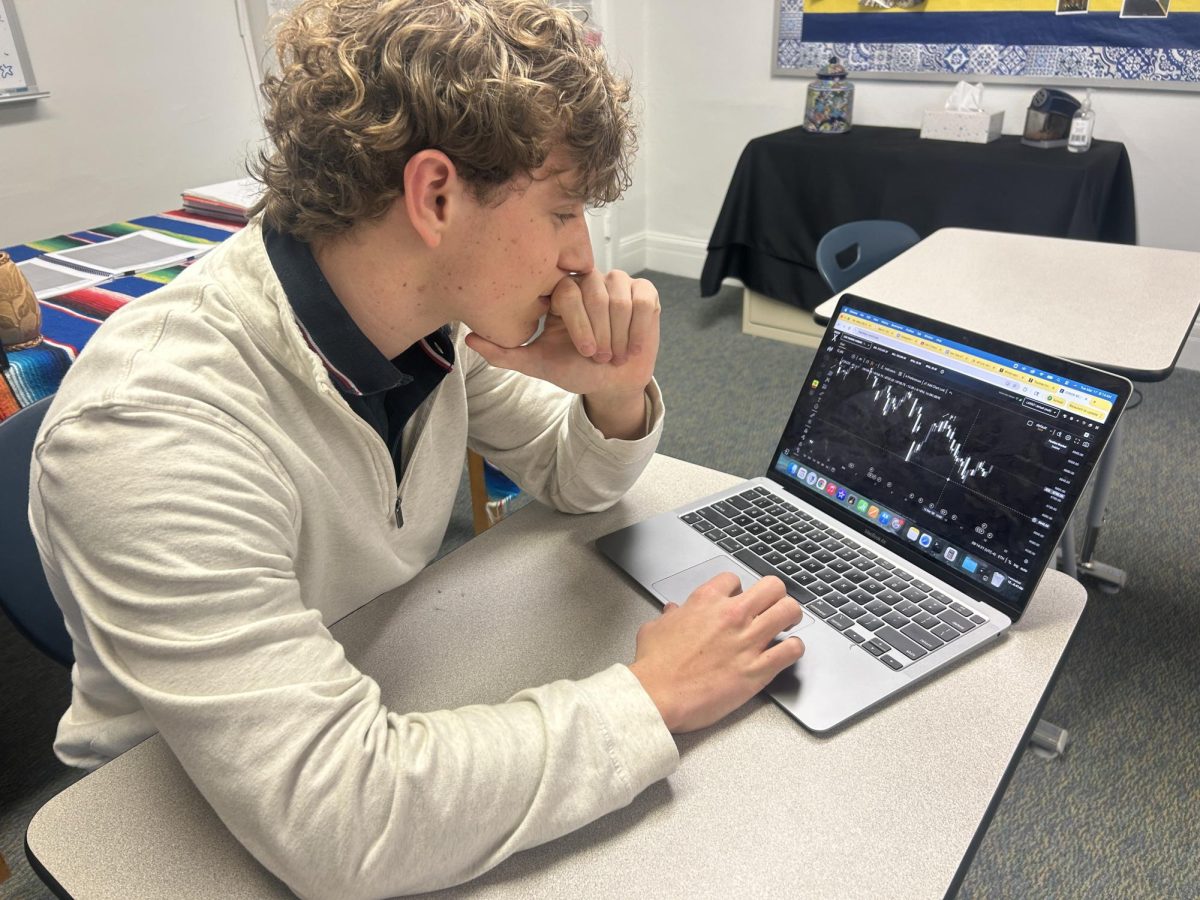
During these summers, Dr. Richards would often come into his classroom at SCH to get work done. Considering the reason he chose to write at SCH, Dr. Richards stated, “I’m more focused when I don’t have the distractions of wandering around my house, finding something to eat, or whatever.”
While much of the book was written over the summer, Dr. Richards still found time to make meaningful progress during the school year. “Sometimes I would stay at night here. Like one night, I’d stay till like nine or ten o’clock at night and almost have a second work day and just work in my classroom,” stated Dr. Richards. He also noted that he would occasionally do work on the weekends or during free periods on rare occasions when he had a clear schedule. “If I had an idea about writing, I would get excited about it, and I’d want to push through.”
During the process of writing, Dr. Richards had access to research material that allowed him to be as accurate and efficient as possible in the writing process. Describing the environment he liked to write in, Dr. Richards stated, “If you saw me writing, I would probably have like eight to ten library books or books I bought, usually used from Amazon, cheap that I’m using for the sources and for that chapter. There’s stuff on my computer, maybe articles printed out, it’s just like piles around me, and I’m with my laptop kind of plowing through.”
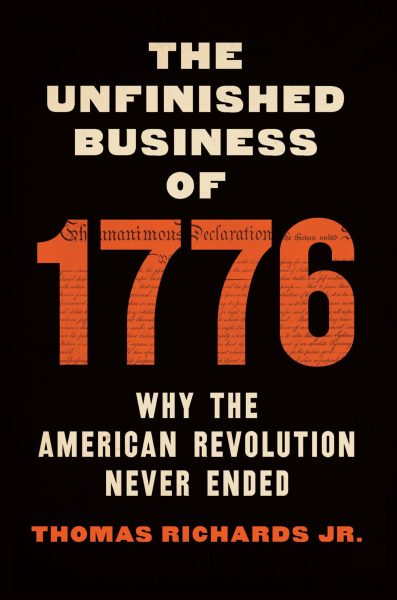
Even though Dr. Richards had previously published a book, the writing process for The Unfinished Business of 1776: Why the American Revolution Never Ended was an entirely different challenge. His first book was an academic book published by Johns Hopkins University Press, focused on the American West, and wasn’t expected to be sold in bookstores to the general public. Instead, it was intended to be consumed in academic settings and focused more on presenting a historical argument rather than appealing to the public and selling copies. “It doesn’t really matter that much if the book sells, because these presses are nonprofits, they are not interested in selling thousands and thousands of copies,” claimed Dr. Richards when referring to his first book.
Unlike his first book, The Unfinished Business of 1776: Why the American Revolution Never Ended, is intended to be consumed by the general public, and isn’t confined to a largely academic audience. “For a book like this, which is called a trade press, an editor picks it up because they want it to sell,” said Dr. Richards.
As a result of the financial aspect that comes with getting a book published for the public, Dr. Richards had to work with professionals who specialize in monetizing books. Reflecting on the process of finding someone to work with, Dr Richards stated, “I had to find a literary agent. That means I sent out what are called queries, saying, ‘here’s my book. Are you interested in representing me?’ And I sent them out to probably 75 or 100 different literary agents, which is really standard.”
After contacting these literary agents, Dr. Richards was able to find an agent who wanted to work with him. “Eventually I got one, and my agent basically said, ‘I like this, I think we can sell this.’”
Dr. Richards noted that the process of finding a literary agent was one of the greatest challenges he faced during the process of turning his idea into a book. “I was really worried that I’m going to finish this book and it would never get published,” said Dr. Richards.
Now that he has found an agent and gotten his book published. Dr. Richards has taken several steps aiming to publicize his work. He has answered questions during radio interviews, planned events at bookstores, and scheduled question-and-answer sessions with the help of his publisher. Considering these events, Dr. Richards stated, “Being in front of people and being able to talk about the book, from an ego standpoint, that’s fun.”
He also noted that these events are an opportunity for him to bolster the sales of his book, especially referring to the events held at bookstores. “If I do a book event, ideally, I can sell thirty or forty books,” he claimed.
Considering the impact that his book’s financial success will have on his future as an author, Dr. Richards noted that regardless of how much money he generates from his book, he still plans to write and publish a third book. “I like it enough that I’ll do it either way. But obviously, if it reaches people, then it’s more motivating to churn a third book out quicker than if it gets lost in the shuffle.”
Finally, when asked if there was anything else he wanted to be included in the article, Dr. Richards mentioned how his passion for teaching at SCH contributed to his completion of The Unfinished Business of 1776: Why The American Revolution Never Ended. “It’s a testament to the community of SCH that I can still do this and teach at the same time even though it’s extra work because I do like my day job,” said Dr. Richards. “I think if I was just getting home and was like ‘this is so hard, I don’t love working here’, I wouldn’t have been able to do this second kind of thing.”
